Our firm delivers comprehensive geotechnical operations across Liverpool, supporting projects from the historic waterfront to suburban developments. We carry out site characterization, subsurface investigation, foundation design, and construction monitoring tailored to local conditions. By integrating consolidated regional experience with calibrated laboratory equipment, we ensure code-compliant reports that meet UK standards. Our approach covers everything from shallow foundation design to Improvement, helping clients navigate Liverpool's unique geology with confidence. Whether for residential, commercial, or infrastructure works, we offer practical solutions that balance safety, cost, and program requirements. Learn more about our residual soil characterization methods.
Technical reference image — Liverpool
Process overview
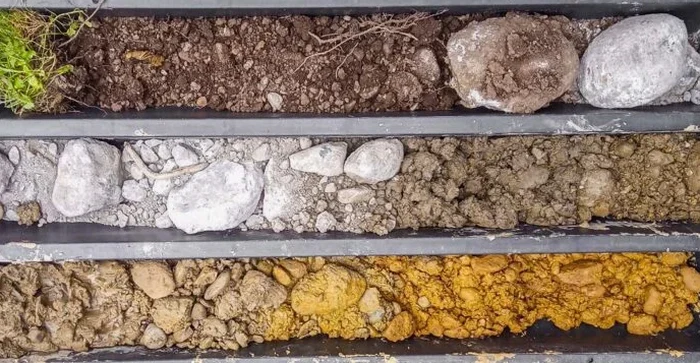
Liverpool's subsurface is shaped by glacial and post-glacial processes. The area is underlain by the Sherwood Sandstone Group, a major aquifer, often overlain by glacial till (boulder clay) deposited during the Devensian glaciation. This till is typically stiff, with variable sand and gravel lenses. In the Mersey Valley and along the waterfront, alluvial deposits of soft clays, silts, and peat are common, posing challenges for foundation design due to low bearing capacity and high compressibility. Groundwater levels are generally shallow, particularly near the River Mersey, requiring careful dewatering and drainage design. The region also has a history of mining subsidence from coal workings beneath parts of the city, notably in the eastern suburbs. These conditions necessitate thorough site investigation and Improvement techniques such as preloading and surcharge design to address settlement risks.
Local context
Our team brings substantial regional expertise in Liverpool's varied ground conditions, from the sandstone bedrock to soft alluvial deposits. We operate a calibrated geotechnical laboratory that prepares code-compliant reports in accordance with UK standards. We maintain close coordination with local contractors, authorities, and the Merseyside Environmental Advisory Service to ensure smooth project delivery. Our understanding of historical mining and waterfront geology allows us to mitigate risks effectively, providing reliable solutions for Liverpool's diverse development needs.
All geotechnical work in Liverpool follows UK standards, primarily BS EN 1997 (Eurocode 7) for geotechnical design, supported by BS 5930 for site investigation and BS 1377 for laboratory testing. Ground investigation typically adheres to the UK Specification for Ground Investigation (ICE). For seismic design, we refer to the UK National Annex to Eurocode 8, though Liverpool is in a low-seismicity zone. Our reports are compliant with these codes, ensuring solid, defensible designs.
Common questions
What are the most common geotechnical challenges for construction in Liverpool?
The main challenges include variable glacial till with lenses of sand and gravel, soft alluvial deposits along the Mersey, and high groundwater levels. Historical coal mining in eastern areas also poses subsidence risks. Proper site investigation is essential to identify these conditions and design appropriate foundations or Improvements.
How does the presence of the Sherwood Sandstone aquifer affect foundation design in Liverpool?
The Sherwood Sandstone is a major aquifer, so shallow groundwater can complicate excavations and require dewatering. Foundations must be designed to avoid buoyancy and water ingress. For deep foundations, the sandstone provides excellent bearing capacity, but groundwater control is critical during construction.
What UK standards must geotechnical reports comply with for Liverpool projects?
Reports must comply with BS EN 1997 (Eurocode 7) for design, BS 5930 for site investigation, and BS 1377 for laboratory testing. Additionally, the UK Specification for Ground Investigation (ICE) is often required. Local planning authorities may also request adherence to the Merseyside Environmental Advisory Service guidelines.
How do you handle soft ground conditions near the Liverpool waterfront?
For soft alluvial clays and silts, we recommend Improvement techniques such as preloading with surcharge, vertical drains, or dynamic compaction. Pile foundations may be needed for heavier structures. We also design temporary works like sheet piling to manage groundwater and excavation stability.
Location and service area
We serve projects across Liverpool.
Location and service area
Effective compaction control hinges on consistent field verification of density and moisture content against approved specifications. Proper documentation links each test to the specific lift location, ensuring a reliable, defensible record for the project. For deeper technical guidance, consult specialized documentation on geotechnical engineering to refine testing protocols.