← Home · In-Situ

Field Permeability Test (Lefranc / Lugeon) – Liverpool

Together, we solve the challenges of tomorrow.

SEE MORE →

A five-storey basement excavation along the Mersey waterfront hit a buried channel of sand and gravel. The contractor needed real permeability numbers before designing dewatering. That is exactly when a field permeability test becomes essential. In Liverpool we run both Lefranc tests in boreholes and Lugeon packer tests in fractured zones. The results give you a direct measure of hydraulic conductivity under site-specific stresses. We combine this with drainage geotechnics to design effective groundwater control. Every test follows BS 5930 procedures and Eurocode 7 principles. No guesswork. Just data you can trust for excavation design and temporary works.
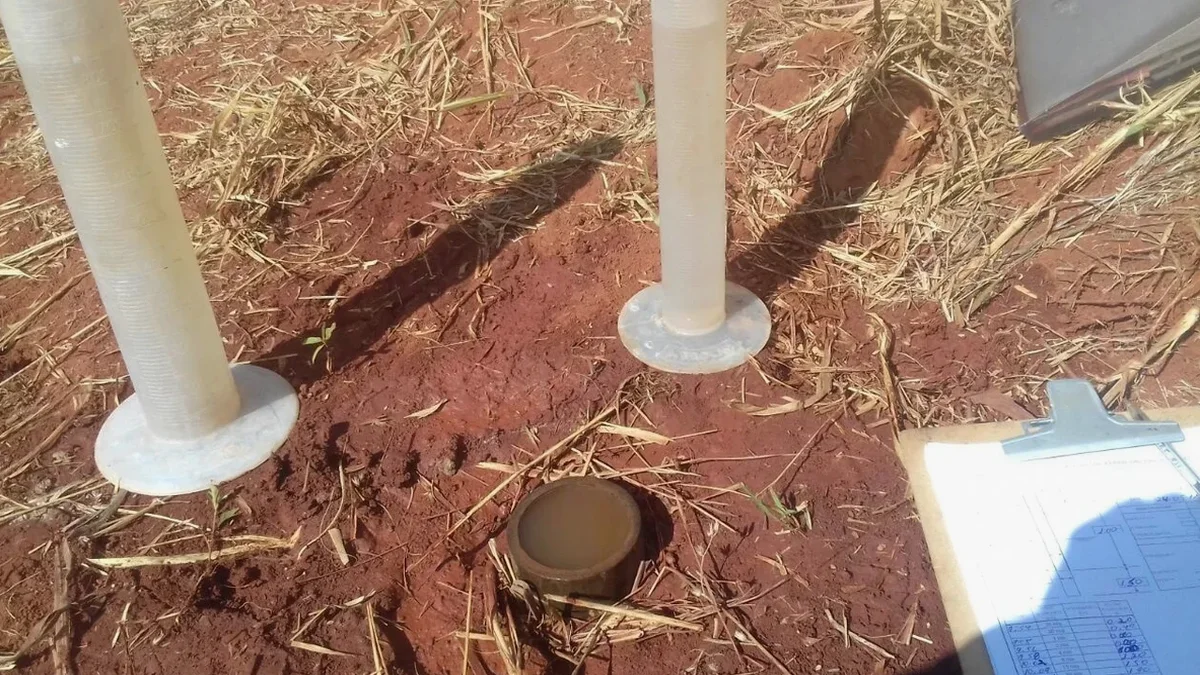
Illustrative image of Field permeability test (Lefranc/Lugeon) in Liverpool
A single field permeability test can save you weeks of programme delay by confirming the real dewatering rate before mobilising pumps.

Process overview

In Liverpool we often see layered sequences where the top sand behaves differently from the underlying till. A field permeability test captures that variation. The Lefranc method works well in low-permeability soils and weathered rock. The Lugeon test fits fractured sandstone or limestone. We use double-packer setups for discrete zones and single-packer for open sections. Before testing we also run a plate load test on stiff clays to compare consolidation behaviour. For deep excavations we cross-check results with CPT data to build a complete hydraulic profile.
Technical reference image — Liverpool

Local context

BS EN 1997-1 requires that groundwater conditions are characterised with sufficient accuracy for ULS and SLS checks. In Liverpool the geology varies from glacial tills under the city centre to soft alluvium along the docks. A single pumping test or falling-head lab test rarely captures the anisotropy of these deposits. Field permeability tests measure the actual in-situ flow behaviour. Without them you risk underestimating seepage, over-designing cut-offs or failing to control uplift during heavy rain. We have seen projects avoid thousands of pounds in claims because the permeability model matched reality.

Need a geotechnical assessment?

Reply within 24h.

Email: contact@geotechnical-engineering.biz

Visual overview


Technical data

ParameterTypical value
Test TypeLefranc (constant/falling head) / Lugeon (5-stage)
Depth RangeUp to 60 m in 76 mm boreholes
Permeability Range1e-7 to 1e-2 m/s
Packer TypePneumatic single or double packer (2.5 m spacing)
Data AcquisitionDigital pressure transducer & flowmeter, 1 Hz logging
Reporting StandardBS 5930:2015 + A1:2020, Eurocode 7 Annex B

Additional services


01

Lefranc Permeability Test

Constant-head or falling-head test in a single borehole. Suitable for sands, silts and weathered mudstone. We install a standpipe and measure inflow or outflow under a small head difference. Results are analysed using Hvorslev's method.

02

Lugeon Packer Test

Five-stage pressure test inside a borehole section isolated by inflatable packers. Applied in fractured sandstone, limestone or competent till. Each stage holds a different pressure while flow is recorded. The Lugeon value (l/min/m/bar) gives a direct measure of rock mass permeability.

03

Double-Packer Discrete Zone Test

Two packers isolate a 1.5–3.0 m interval. Useful when you need permeability per stratum in layered ground. We run the test at natural groundwater pressure and at applied heads up to 5 bar. Data is used for seepage modelling and grouting design.

Relevant standards

BS 5930:2015 + A1:2020 – Code of practice for ground investigations, BS EN 1997-1:2004 (Eurocode 7) – Geotechnical design, general rules, BS EN 1997-2:2007 – Ground investigation and testing

Common questions


What is the difference between a Lefranc test and a Lugeon test?

The Lefranc test measures permeability in soils and weak rock using a constant or falling head in a single borehole. The Lugeon test is a packer-controlled test for fractured rock where water is injected at five ascending pressure stages. Both follow BS 5930 procedures. The choice depends on the formation: Lefranc for sands and clays, Lugeon for rock masses with joints or fissures.

How much does a field permeability test in Liverpool cost?

A typical single-borehole Lefranc test including mobilisation, testing and a full report ranges between £500 and £930. Lugeon tests with double packers cost more due to additional equipment and setup. The exact price depends on depth, number of test sections and access constraints. Contact us with your borehole details for a fixed quote.

What standards do you follow for permeability testing in Liverpool?

All field permeability tests are carried out in accordance with BS 5930:2015+A1:2020 and BS EN 1997-2:2007. Our laboratory holds UKAS accreditation (ISO 17025) for geotechnical testing. Data interpretation uses Hvorslev, Bouwer & Rice and USBR methods. We also cross-check results against CPT and SPT logs when available.

Location and service area

We serve projects across Liverpool.

Location and service area