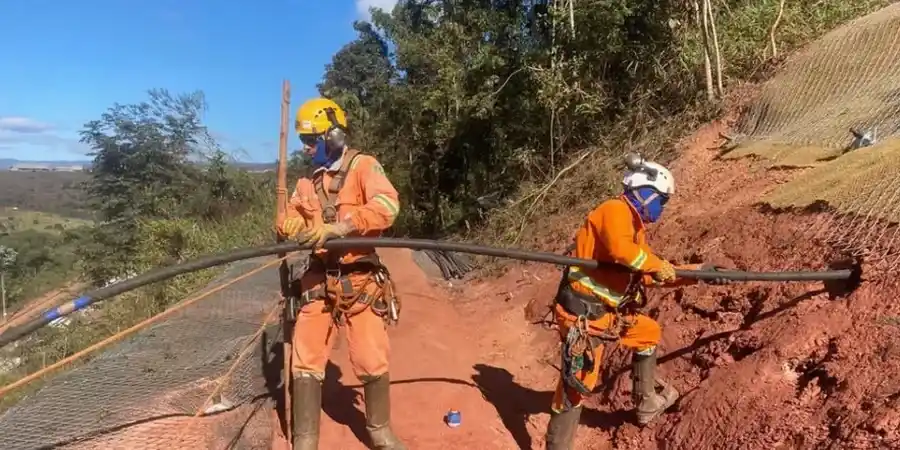
During a recent residential development on the sandstone slopes above the Mersey, we installed inclinometers and standpipe piezometers to track pore‑water pressure changes after heavy autumn rains. The client needed a monthly monitoring programme to validate the temporary works design for a 9‑m deep excavation adjacent to a Victorian terrace. By correlating rainfall records with slope displacement data, we confirmed that the factor of safety remained above 1.5 throughout the construction phase. This kind of systematic geotechnical slope monitoring (monthly) is essential when working on Liverpool’s steeply dipping Triassic sandstone and glacial till sequences, where perched water tables can shift rapidly. The data also fed directly into the stability of slopes analysis required by the local authority for the party‑wall agreements.
Monthly inclinometer data correlated with pore‑pressure records allows us to identify accelerating creep weeks before any visible surface cracking appears on Liverpool’s slopes.
Process overview
Liverpool’s urban expansion since the 18th century has carved deep road cuttings and filled former dock basins with heterogeneous made ground — a legacy that demands careful geotechnical slope monitoring (monthly) to detect incipient movement before it reaches critical levels. Our programme includes weekly or bi‑weekly inclinometer surveys, automated datalogging of vibrating‑wire piezometers, and precise total‑station surveys of surface prisms.
Inclinometer casing installed to depths of 12–20 m in sandstone and till.
Standpipe piezometers with pressure transducers for continuous pore‑water recording.
Surface prisms monitored with Leica TS16 to ±1 mm accuracy.
We also correlate movement data with local tide levels (Liverpool’s tidal range exceeds 10 m) and rainfall from the Bidston Observatory record. Complementing the slope monitoring with in‑situ permeability tests helps us refine the seepage model and anticipate pore‑pressure spikes after prolonged wet periods — a common trigger for shallow failures in the clay‑rich till horizons.
Technical reference image — Liverpool
Local context
Liverpool sits on a sequence of Triassic sandstone, mudstone, and glacial till, with natural slopes reaching 30° in the city’s eastern suburbs. The 2018–2019 winter saw 140% of average rainfall, triggering at least five recorded shallow landslides along the Mersey valley — some within 20 m of residential properties. Without systematic geotechnical slope monitoring (monthly), a slow creep of 2 mm per month can accelerate to 50 mm in a single storm event, leading to retaining wall failure or foundation distress. Our monitoring programme provides the early warning that enables contractors and homeowners to implement drainage improvements or rock‑fall netting before the slope reaches a critical state.
Movement >3 mm/month or pore‑pressure >80% of overburden
Monitoring duration (typical)
12–24 months (renewable monthly)
Additional services
01
Inclinometer surveys
Manual readings at 0.5 m intervals using a biaxial probe; data plotted for cumulative displacement profiles and shear‑zone identification.
02
Piezometric monitoring
Continuous logging of pore‑water pressure in standpipe piezometers; alerts sent when levels exceed predefined trigger thresholds.
03
Surface deformation surveys
Total‑station or GNSS measurement of surface prisms and reference targets; monthly reports with displacement vectors and velocity trends.
04
Rainfall & tidal correlation
Daily rainfall data from the Met Office combined with tide‑gauge records from Gladstone Dock to assess the influence of tidal loading on slope stability.
This service complements our laboratory testing work for a complete project analysis.
Relevant standards
BS 5930:2015 Code of practice for ground investigations, Eurocode 7 – EN 1997‑1:2004 (slope stability limit states), FHWA‑NHI‑05‑037 (landslide monitoring guidelines)
Common questions
How much does monthly geotechnical slope monitoring cost in Liverpool?
A typical monthly programme covering 4 inclinometers, 6 piezometers, and 10 surface prisms costs between £330 and £1,000 per month, depending on access conditions, data‑logging equipment, and reporting frequency. We carry out a fixed‑price quote after the initial site walkover.
What is the minimum monitoring duration for a slope in Liverpool’s sandstone?
We recommend a minimum of 12 months to capture seasonal pore‑pressure cycles and at least one full winter. For slopes with known seepage or previous movement, a 24‑month programme is standard to establish reliable trend lines and trigger levels.
What alarm thresholds do you use for slope movement?
We typically set a green/amber/red system: green ≤2 mm/month (routine), amber 2–5 mm/month (increase reading frequency), red >5 mm/month or accelerating creep (immediate site inspection and possible remedial action). Thresholds are reviewed monthly and adjusted based on the specific slope geometry and nearby assets.
Do you provide real‑time data access for the monitoring results?
Yes, we offer a secure web portal with real‑time dashboards showing inclinometer profiles, pore‑pressure time series, and surface displacement vectors. Monthly summary reports with trend analysis and recommendations are sent in PDF format, and alarm notifications are triggered automatically via email or SMS.