← Home · Improvement

Landfill Geotechnics in Liverpool

Together, we solve the challenges of tomorrow.

SEE MORE →

Liverpool sits on Triassic sandstone and glacial till, with a water table as shallow as 2 m in parts of the city. That combination makes landfill geotechnics a specialist discipline here. We have worked on closed municipal sites in Speke and brownfield redevelopment zones where waste thickness exceeds 12 m. Before any capping or foundation design, we evaluate the waste mass using boreholes and CPT testing to map refuse composition and void ratio. The same dataset feeds into settlement modelling and gas generation forecasts.
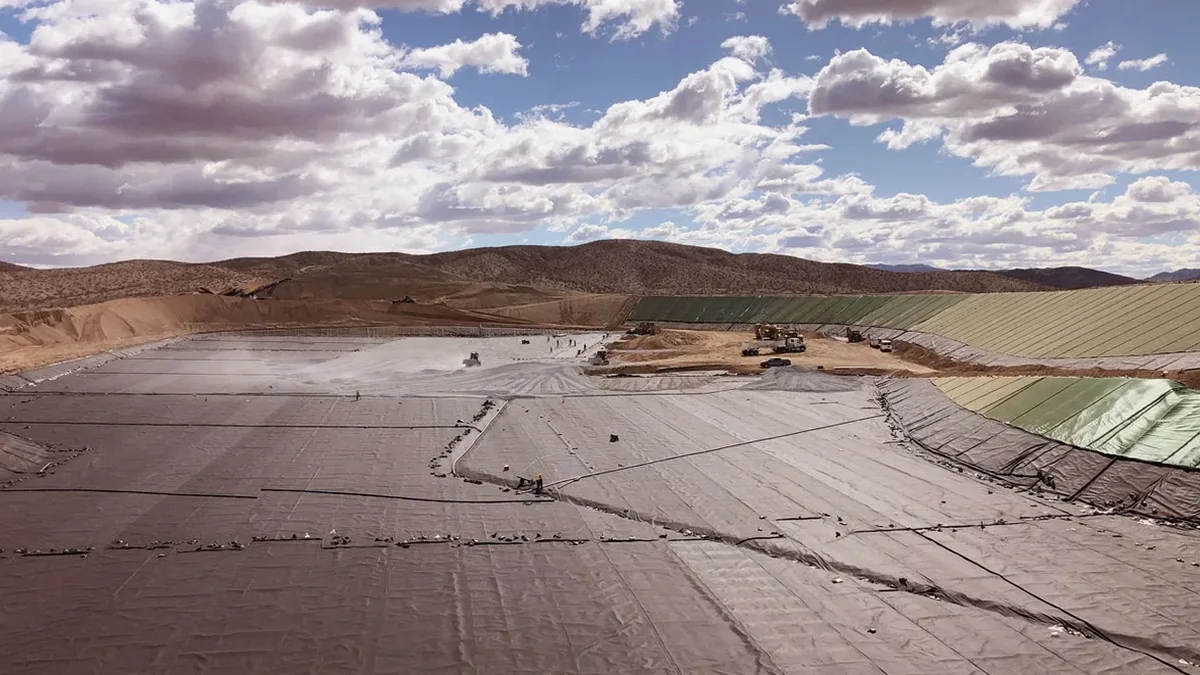
Illustrative image of Landfill geotechnics in Liverpool
A 2 m water table and 12 m of waste make settlement prediction the critical path in Liverpool’s landfill geotechnics.

Process overview

We follow BS 5930:2015 for site investigation and Eurocode 7 (EN 1997-1:2004) for geotechnical design of containment systems. In Liverpool’s reclaimed docklands, the challenge is differential settlement between old fill and natural ground. We combine stability analysis with staged construction checks to prevent shear failure in the liner slope. Our methodology includes: The goal is a defensible design life of at least 30 years, as required by the Environment Agency.
Technical reference image — Liverpool

Local context

Liverpool’s 800 mm annual rainfall and clay-rich glacial tills create a high risk of leachate mounding within the waste mass. During heavy winter storms, perched water tables can rise 1.5 m in 48 hours, reducing effective stress and triggering instability in steep side slopes. We mitigate this through drainage layers designed with factor of safety ≥ 1.5 under saturated conditions. Gas migration is another hazard — methane concentrations in the unsaturated zone can exceed 5 % LEL if the cap is not properly sealed. Our monitoring arrays include piezometers and gas wells installed at 20 m centres.

Need a geotechnical assessment?

Reply within 24h.

Email: contact@geotechnical-engineering.biz

Technical data


ParameterTypical value
Waste thickness6 - 18 m
Foundation soil undrained shear strength40 - 90 kPa
Waste unit weight10 - 14 kN/m³
Primary settlement index (Cc)0.15 - 0.35
Gas generation half-life5 - 15 years
Liner hydraulic conductivity≤ 1 × 10⁻⁹ m/s

Additional services

01

Waste mass characterisation

Borehole drilling, waste logging, index testing and gas potential assessment to classify the refuse body and inform settlement predictions.

02

Liner and cap design verification

Slope stability analysis, hydraulic barrier design and long-term settlement modelling for composite liner systems under Eurocode 7.

03

Gas and leachate control

Design of passive and active gas extraction wells, leachate drainage layers and monitoring networks for compliance with Environment Agency standards.

Relevant standards


BS 5930:2015 – Code of practice for ground investigations, BS EN 1997-1:2004 (Eurocode 7) – Geotechnical design, Environment Agency LFTGN 04 – Landfill gas monitoring guidance

Common questions

What does landfill geotechnics involve for a site in Liverpool?

It covers investigation of waste composition, foundation soils and groundwater; settlement analysis; slope stability of containment bunds; and design of gas/leachate control systems. Work follows BS 5930 and Eurocode 7.

How much does a landfill geotechnical investigation cost in Liverpool?

Typical costs range between £1,620 and £6,160 depending on borehole depth, number of monitoring wells and laboratory testing volume. A small site with 4 boreholes to 10 m depth sits at the lower end; a large former landfill with gas wells exceeds the upper figure.

How long does settlement take in Liverpool's landfill sites?

Primary settlement from waste compression usually completes within 2–5 years under cap load. Secondary settlement (due to creep and biodegradation) can continue for 15–25 years. We model both stages using Casagrande's method and site-specific compression indices.

Location and service area

We serve projects across Liverpool.

Location and service area