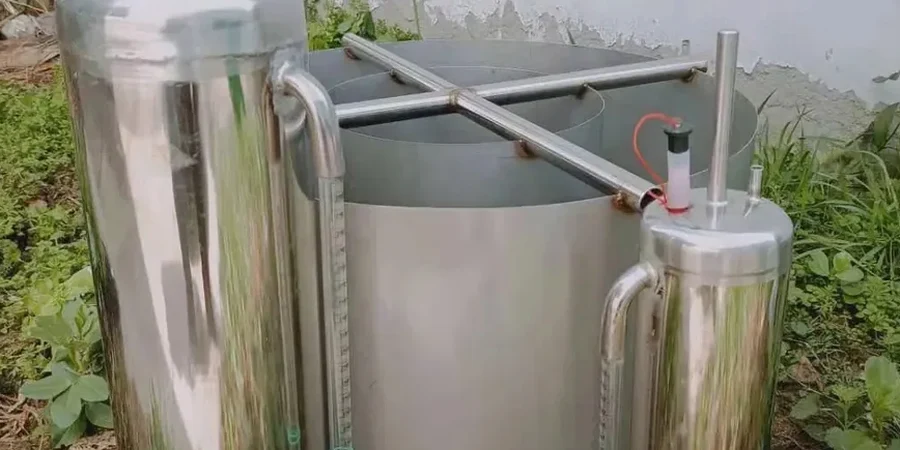
Liverpool's rapid expansion during the 18th and 19th centuries, driven by its port and maritime trade, saw the city spread across the Mersey floodplain and onto the surrounding Permo-Triassic sandstone bedrock. This historical development left a complex mosaic of made ground, alluvial silts and glacial tills beneath the streets. When we plan a new soakaway or sustainable drainage system (SUDS) in this city, understanding how fast water can move through that layered ground is essential. That is exactly why the infiltration test, using either the Porchet or the double-ring infiltrometer method, is our go-to field technique for measuring hydraulic conductivity in Liverpool's varied urban soils.
A double-ring infiltrometer eliminates lateral seepage error; in Liverpool's alluvial ground, that difference can be a factor of three.
Process overview
Liverpool sits at around 70 metres above sea level at its highest point, but much of the city centre lies on low-lying estuarine deposits where the water table can be within a metre of the surface. In our experience, the double-ring infiltrometer is particularly effective here because it minimises lateral flow in these saturated conditions, giving a reliable vertical infiltration rate. We typically combine the infiltration test with a permeability field test to cross-check results across different horizons. The procedure follows a simple but strict protocol: we pre-soak the ground for at least four hours, record steady-state flow over a minimum of two hours, and report the rate in metres per second or millimetres per hour, depending on the drainage design code being used.
Technical reference image — Liverpool
Local context
The contrast between the well-drained Triassic sandstone that underlies much of the Wirral side and the clay-rich glacial tills beneath the city centre is stark. In the clay zones, infiltration rates can drop below 1×10⁻⁷ m/s, making standard soakaways unviable without engineered drainage. If the test is performed too soon after heavy rain or without adequate pre-soaking, the result will overestimate permeability, leading to a drainage design that ponds water on the surface. We always note the antecedent moisture conditions in the report, and we recommend a minimum of three test locations per site to capture the natural variability.
Constant-head and falling-head tests in boreholes, using the same BS 5930 protocols as the infiltration test but suited to deeper strata.
02
Soakaway Design Support
Interpretation of infiltration rates into design recommendations for conventional soakaways, cellular storage and attenuation basins.
03
Groundwater Monitoring
Installation of standpipes and data-loggers to track seasonal water table fluctuations, critical for drainage design in low-lying areas.
04
Particle Size Distribution
Laboratory sieve and hydrometer analysis to correlate infiltration rate with the percentage of fines, especially in Liverpool's glacial till deposits.
This service complements our laboratory testing work for a complete project analysis.
Relevant standards
BS 5930:2015 – Code of practice for ground investigations, BS EN ISO 22282-4:2012 – Geotechnical investigation and testing, field permeability tests, BRE Digest 365 – Soakaway design (references infiltration rate)
Common questions
How does the double-ring infiltrometer differ from the Porchet test?
The double-ring method uses an outer buffer ring to prevent lateral flow, so it gives a truer vertical infiltration rate. The Porchet test, a single-ring variant, is faster but can overestimate permeability in layered ground unless corrected. For Liverpool's alluvial and glacial soils, we typically recommend the double-ring approach for design-level accuracy.
What is the typical cost range for an infiltration test in Liverpool?
The cost for a single infiltration test, including setup, pre-soak, two-hour steady-state recording and a written report, is usually between £250 and £330 per test location. The total project cost depends on the number of test points and access conditions on site.
How many test locations do I need for a soakaway design?
The BRE Digest 365 recommends a minimum of three test pits or infiltration tests per proposed soakaway location. On larger sites with variable ground, we often space tests 20–30 m apart to capture lateral variability in the glacial till and sandstone interface that is common across Liverpool.