← Home · Foundations

Collapsible Soil Evaluation in Liverpool

Together, we solve the challenges of tomorrow.

SEE MORE →

A five-storey residential block we recently assessed in the Kensington district showed clear signs of differential settlement after a wet winter. The underlying loess-like deposits in that part of Liverpool are prone to sudden volume loss when saturated under load. Our team carried out a detailed collapsible soil evaluation using double-oedometer tests and field density measurements to quantify the collapse potential. For shallow foundations on these materials, we always pair the assessment with a study of surface foundations to verify bearing capacity under wetting conditions.
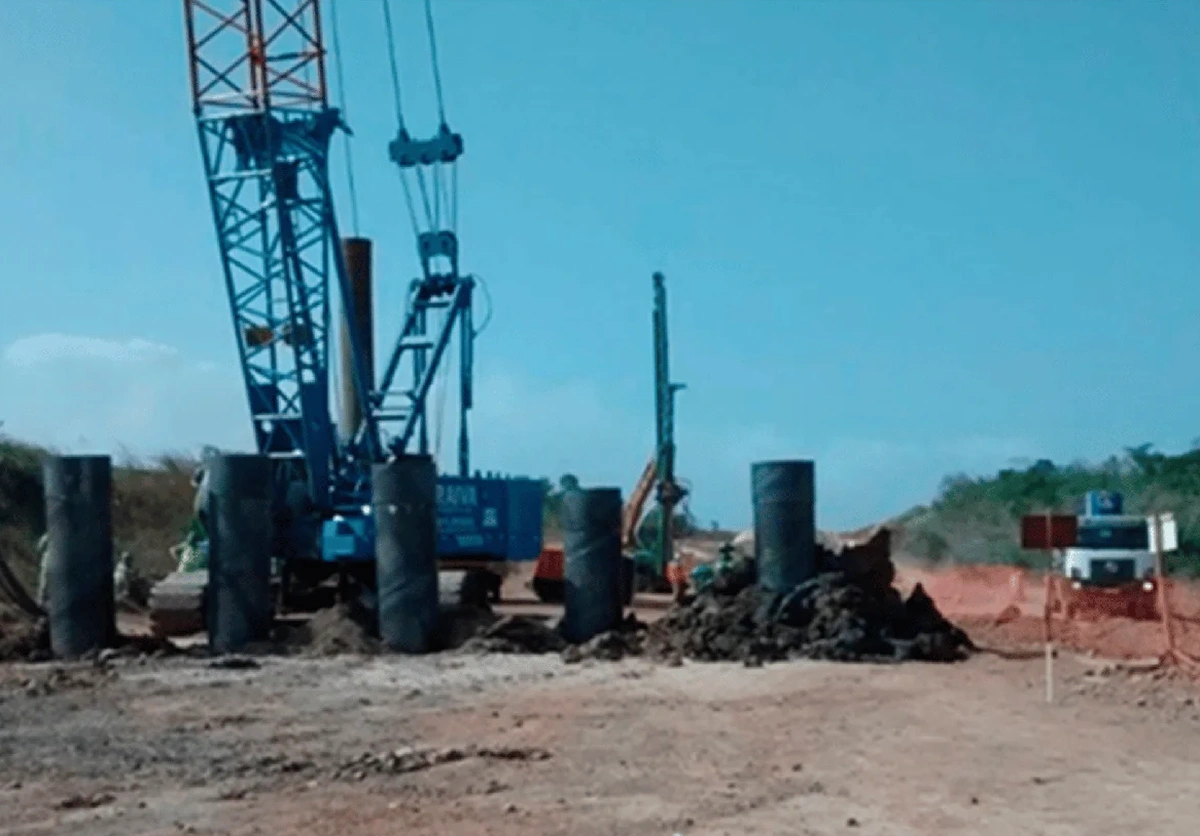
Illustrative image of Collapsible soil evaluation in Liverpool
Collapse strains above 2% under 200 kPa load require deep foundation solutions or Improvement before any structure can be built safely.

Process overview

The difference between the sandstone-derived soils in Woolton and the alluvial clays of the Mersey floodplain is stark. Woolton's granular collapsible soils show collapse strains above 2% under a 200 kPa load, while the floodplain clays rarely exceed 0.5%. We map these variations across Liverpool using a combination of SPT testing and undisturbed sampling. The evaluation follows a structured workflow: This protocol ensures we capture the true collapse behaviour of each stratum.
Technical reference image — Liverpool

Local context

Liverpool's industrial expansion in the 19th century saw extensive filling of the Toxteth and Edge Hill valleys with heterogeneous materials. These undocumented fills, combined with natural loessic silts from the Wirral Peninsula, create zones where collapse upon wetting is a real threat. We have documented cases where post-construction water leaks triggered 40 mm of differential settlement in buildings less than 15 years old. Our evaluation identifies these high-risk areas before excavation begins, allowing designers to specify appropriate Improvement or deep foundation systems.

Need a geotechnical assessment?

Reply within 24h.

Email: contact@geotechnical-engineering.biz

Technical data


ParameterTypical value
Collapse index (Ie)0.5% - 6.0% (BS 5930 criteria)
Wetting-induced settlement15 - 80 mm under 200 kPa
Natural moisture content8% - 22% (seasonal variation)
Dry density1.45 - 1.75 Mg/m³
Collapse potential (Cp)0.5% - 4.5% per BS 1377-5

Additional services

01

Field collapse assessment

In-situ plate load tests with controlled wetting to simulate worst-case saturation. We monitor settlement under constant load while flooding the test pit, recording collapse onset and magnitude in real time.

02

Laboratory double-oedometer testing

Undisturbed samples are tested at natural moisture and fully saturated conditions. The collapse index is calculated per BS 1377-5, and we provide a collapse potential profile with depth for each borehole location.

Relevant standards


BS 5930:2015 (Code of practice for ground investigations), Eurocode 7 (BS EN 1997-1:2004) – Design approach for collapse-prone soils, BS 1377-5 (Standard test method for measurement of collapse potential)

Common questions

How much does a collapsible soil evaluation cost in Liverpool?

For a typical residential site in Liverpool, expect costs between £660 and £2,170 depending on the number of test pits, laboratory tests required, and site access conditions. We provide a fixed-price quote after a brief site walkover.

What is the collapse mechanism in Liverpool's soils?

Collapsible soils in Liverpool lose strength when the inter-particle bonds that hold the loose structure together dissolve upon wetting. This is common in loessic silts and fills where the apparent cohesion is provided by clay bridges or soluble salts. The collapse is sudden and often asymmetric.

How deep do I need to investigate for collapse potential?

We typically investigate to at least 6 metres below foundation level, or until we reach non-collapsible strata. In Liverpool's historic fill areas, deeper investigation may be warranted due to the variable thickness of anthropogenic deposits.

Visual overview

Location and service area


We serve projects across Liverpool.

Location and service area