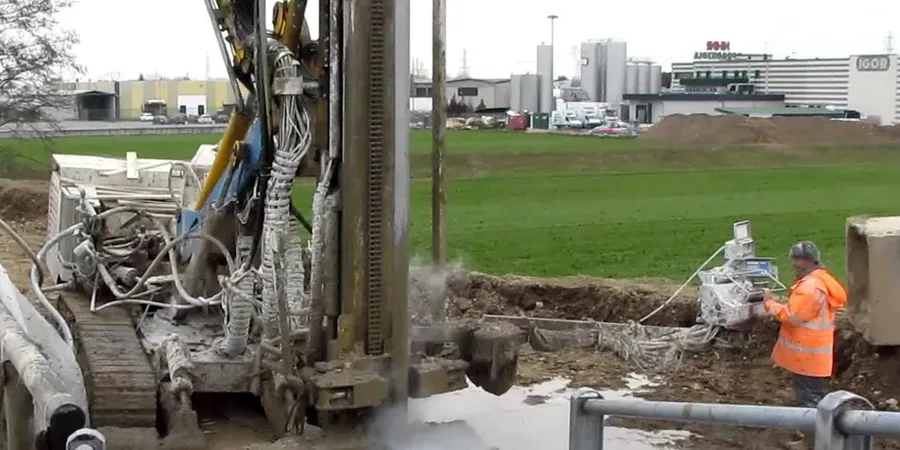
A warehouse extension we worked on near the Port of Liverpool had a 3 m layer of made ground over soft alluvial clay. Water was seeping through old brick culverts beneath the slab. We designed a grouting program to seal the voids and reduce permeability before placing the new floor. The grouting design used a cement-bentonite mix injected through sleeved pipes at 1 m spacing, with pressures kept below 2 bar to avoid hydrofracture. Before starting, we ran a trial with a plate load test to confirm the target stiffness, and we cross-checked the injection volumes against the void ratio estimated from boreholes. That phased approach saved the client from having to dig out and replace the fill.
In Liverpool's variable ground, grouting design must account for buried structures, the Sherwood Sandstone aquifer, and contaminant mobilisation risk.
Process overview
Liverpool sits on the Triassic Sherwood Sandstone aquifer, with variable superficial deposits of glacial till, laminated clay, and river terrace gravel. The city's historic industrial activity left many buried structures and contaminated zones. A grouting design here must account for both the target strata and the risk of mobilising contaminants. We typically start with a desk study of old maps and borehole logs, then propose injection methods matched to the ground conditions. For permeable gravels we use low-viscosity chemical grouts; for fissured till we prefer cement suspensions. The drainage regime around the Mersey influences how far the grout travels, so we monitor injection pressure and volume in real time. Each design is certified under our UKAS-accredited quality system (ISO 17025).
Technical reference image — Liverpool
Local context
A common mistake we see on Liverpool sites is assuming one grout mix works everywhere. Contractors often pump a standard cement grout into made ground without checking the local void size or water chemistry. That wastes material and leaves unsealed zones. Worse, over-pressuring can lift existing operations or mobilise dissolved metals from historical fill. A proper grouting design phases the injection sequence, limits pressure by stage, and uses tracer tests when needed. We also verify the result with core drilling or permeability tests after curing. Skipping that validation step turns a controlled treatment into an uncontrolled gamble.
Injection of low-pressure cement grouts into voids, abandoned culverts, and mine workings beneath existing structures. We calculate theoretical void volumes from borehole data and control injection to avoid surface heave.
02
Permeability reduction (curtain grouting)
Design of single- or multi-row grout curtains to cut water flow through fissured rock or granular soils. We specify sleeve pipe arrays and mix designs based on Lugeon test results from the site.
03
Compensation grouting
For tunnelling or basement excavation adjacent to sensitive structures. We plan phased injections to counteract settlement, using real-time monitoring of heave and tilt to adjust the grouting parameters on the fly.
04
Chemical grouting for fine soils
Low-viscosity acrylate or polyurethane resins injected into silt or fine sand to increase strength or reduce permeability. We design the gel time and radius of influence from laboratory column tests on site-specific materials.
Relevant standards
BS EN 12715:2000 — Execution of special geotechnical work: Grouting, Eurocode 7 (BS EN 1997-1:2004) — Geotechnical design, CIRIA C573 — Grouting for ground engineering
Common questions
What does a grouting design in Liverpool typically cost?
For a medium-sized commercial site in Liverpool, the design and supervision of a grouting program usually falls between £1.140 and £3.760. That range covers the desk study, mix design testing, injection plan, and on-site quality control. Larger volumes or deep injections push the upper end.
How long does it take to design a grouting program?
A straightforward void-filling design takes about one to two weeks. If we need laboratory tests on the grout mix or a trial injection area, add another week. The schedule depends on how fast we get the site investigation data.
What ground conditions in Liverpool need grouting the most?
Made ground with old foundations, collapsed drains, or chalky fill is common near the city centre. Soft alluvial clay under the docks also benefits from compensation grouting when tunnelling. We always check for buried operations and contamination before starting.
Do you certify the grouting design for insurance or warranty?
Yes. Every grouting design we issue is signed off under our ISO 17025 quality system. We carry out injection records, pressure logs, and post-treatment verification results (cores or permeability tests) that satisfy warranty conditions and Building Control requirements.