A common mistake among construction firms in Liverpool is assuming all sandy soils behave the same under seismic loading. The Mersey Basin contains loose, saturated sands and silts that can lose strength suddenly during an earthquake or heavy vibration. Without a proper soil liquefaction analysis, foundations designed for static loads may settle or tilt when pore pressures spike. We evaluate each site using Youd-Idriss 2001 criteria and local borehole data. Before pouring concrete, we often recommend a consolidation test to check settlement potential and a CPT sounding for continuous profiling of loose layers.
Loose saturated sands under Liverpool can liquefy during moderate seismic events. Factor of safety below 1.2 demands Improvement.
Process overview
On sites near the Albert Dock or along the River Mersey, we frequently see fill materials and alluvial deposits with low blow counts. A reliable liquefaction analysis here starts with a proper SPT program following BS EN ISO 22476-3. We measure fines content, mean grain size, and cyclic resistance ratio. The procedure includes:
N-value correction for overburden and rod length
Magnitude scaling factor based on UK seismicity (Mw 4.5–5.5)
Factor of safety calculation against triggering
For deeper layers we cross-check with MASW profiles to validate shear wave velocity. Every result is compared against the NCEER 2001 workshop recommendations.
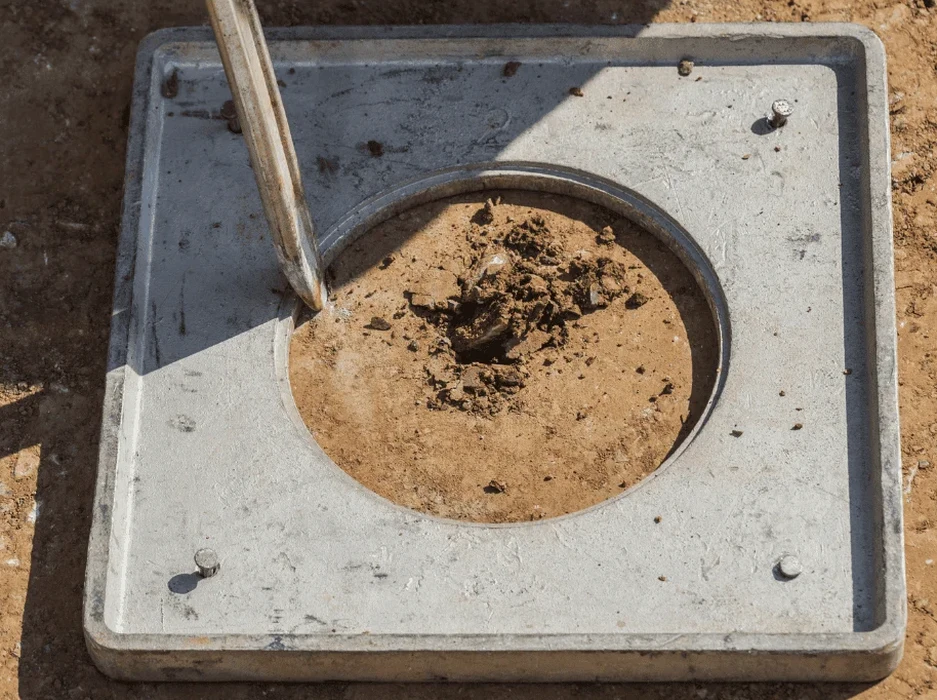
Technical reference image — Liverpool
Local context
Compare the Wirral side with the Liverpool city centre. In Toxteth and parts of Bootle, recent alluvial sands dominate; in Everton and West Derby, glacial tills carry out higher density. The difference is critical. A liquefaction analysis that works for a site on boulder clay fails when applied to loose river deposits. We map each borehole against British Geological Survey data to separate low-risk from high-risk zones. Ignoring this variability leads to differential settlement and structural damage – exactly the problem seen in post-seismic reports worldwide.
Borehole drilling with split-spoon sampling at 1.5 m intervals. N-values corrected for overburden, hammer energy, and rod length. Samples retained for fines content and grain size distribution.
02
Cyclic Resistance Evaluation
Laboratory cyclic triaxial tests on undisturbed samples from liquefiable layers. CRR curves generated for Mw 5.0 and 6.0 scenarios. Results compared to NCEER empirical charts.
03
Liquefaction Hazard Mapping
GIS-based mapping of Factor of Safety across large sites. Identifies zones requiring Improvement. Suitable for residential developments, industrial parks, and infrastructure corridors.
Relevant standards
NCEER 2001 (Youd & Idriss SPT-based method), BS 5930:2015 (Site investigation code of practice), Eurocode 7 – EN 1997-2:2007 (Geotechnical design – ground investigation), BS EN ISO 22476-3 (Standard test method for SPT)
Common questions
What is soil liquefaction and why does it matter in Liverpool?
Soil liquefaction occurs when loose, saturated sand loses strength during cyclic loading (earthquake or heavy machinery vibration). In Liverpool, the Mersey alluvial deposits and reclaimed docklands contain layers susceptible to pore pressure buildup. If triggered, buildings can tilt or sink unevenly. Our analysis identifies those layers and calculates the factor of safety.
How much does a liquefaction analysis cost in Liverpool?
A standard liquefaction study for a medium-sized development (4–6 boreholes, SPT, lab tests) typically ranges between £2,230 and £3,500. The final price depends on site access, number of layers tested, and whether cyclic triaxial tests are required.
Which standards do you follow for liquefaction assessment?
We apply the NCEER 2001 workshop procedures (Youd & Idriss) as the primary framework, supported by BS 5930:2015 for site investigation and Eurocode 7 (EN 1997-2) for design. All SPT equipment is calibrated per BS EN ISO 22476-3.
What Improvement methods work after liquefaction risk is found?
Common solutions include deep compaction (vibroflotation), stone columns, and jet grouting. For Liverpool sites with high water tables, we often recommend prefabricated vertical drains combined with surcharge to densify the sand before construction. Each method is selected based on target CRR and site constraints.