Liverpool’s eastern suburbs, like Childwall, sit on boulder clay over Triassic sandstone, while the city centre and waterfront districts rest on made ground and alluvial deposits along the Mersey. That contrast matters for debris flow analysis. The steep-sided sandstone valleys around Woolton and Allerton concentrate runoff during heavy rain, mobilising loose soil and colluvium. In the built-up areas near the docks, historical fill layers can liquefy under intense storms. Understanding where debris flows can originate—and how fast they travel—requires site-specific geotechnical modelling. Before assessing runout paths, engineers often combine the debris flow study with a stability of slopes evaluation to identify critical failure surfaces in the upper catchment.
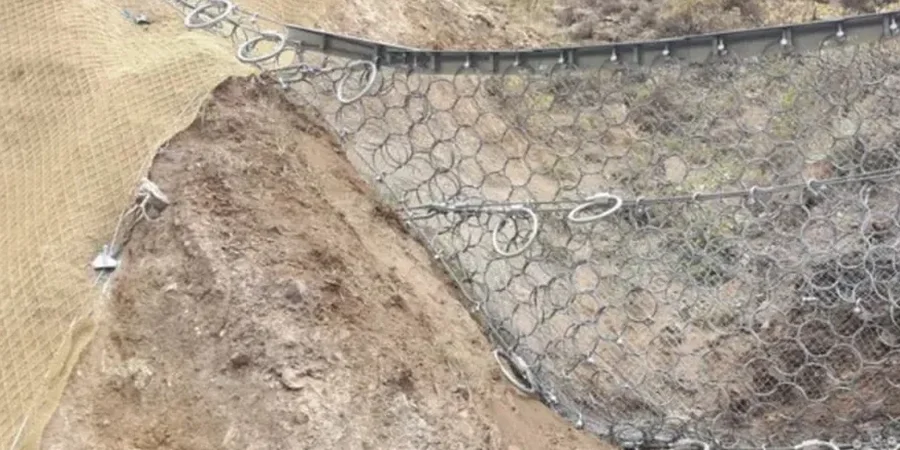
The weathered till over Triassic sandstone in Liverpool creates a two-layer system where debris flows mobilise rapidly after sustained rainfall.
Process overview
The Triassic sandstone beneath much of Liverpool is generally strong, but its weathered mantle and glacial till cap create a two-layer system prone to sliding after prolonged rainfall. Debris flow analysis here must account for soil suction loss and perched water tables that develop within the till. The team uses a phased approach: field reconnaissance to map source zones, followed by soil sampling for index properties and shear strength under saturated conditions. The analysis also incorporates a cone penetration test in soft ground areas to measure stratigraphy and pore pressure continuously. Laboratory results feed into numerical models that simulate runout distance, flow velocity, and deposition depth. Typical outputs include hazard zonation maps and recommended mitigation measures such as drainage or check dams.
Technical reference image — Liverpool
Local context
Eurocode 7 (EN 1997-1:2004) requires that slope stability and debris flow hazards be treated as ultimate limit states. In Liverpool, that is especially relevant because the city’s topography combines steep sandstone escarpments with extensive made ground from industrial reclamation. A debris flow that originates in the upper till layer can travel over 200 metres into residential areas, as seen in past events on the Wirral side of the Mersey. Ignoring this risk during planning can lead to sudden failure during a 1-in-100-year storm. The analysis must also comply with BS 5930:2015 for site investigation and BS EN 1997-2:2007 for ground investigation and testing.
Field mapping of source areas, soil sampling, and numerical simulation using RAMMS or DAN3D to predict flow paths and impact zones. Output includes a hazard map and risk rating.
02
Mitigation Design and Drainage Assessment
Design of check dams, debris basins, and surface drainage systems to reduce flow energy. Includes hydraulic analysis of existing culverts and swales.
This service complements our laboratory testing work for a complete project analysis.
Relevant standards
Eurocode 7 — EN 1997-1:2004 (Ultimate limit state for slopes), BS 5930:2015 — Code of practice for ground investigations, BS EN 1997-2:2007 — Ground investigation and testing, FHWA-NHI-07-071 — Rock and debris flow analysis guidelines
Common questions
What is the difference between a debris flow and a landslide?
A debris flow is a fast-moving mixture of soil, rock, and water that travels down a steep channel, while a landslide typically involves slower movement of a coherent soil mass along a failure surface. Debris flows can travel several hundred metres at speeds up to 8 m/s.
How much does a debris flow analysis cost in Liverpool?
The typical cost ranges from £1,120 to £3,420, depending on site size, complexity, and whether numerical modelling is required. Contact us for a detailed quote based on your specific site.
Can debris flow analysis help with planning permission on steep slopes?
Yes. Local authorities in Liverpool often require a debris flow hazard assessment for developments near steep sandstone valleys. The analysis demonstrates that the risk is understood and that mitigation measures are in place.
What data do you need to start the analysis?
We need a topographic survey (LiDAR preferred), historical rainfall data, and soil samples from the source zone. If available, previous borehole logs help calibrate the model. The team can also conduct a site walkover to map debris sources.
How long does a typical debris flow study take?
A standard study takes 4 to 6 weeks from site visit to final report. Complex sites with multiple source zones or large runout areas may require 8 weeks. Urgent assessments can be expedited.