Together, we solve the challenges of tomorrow.
SEE MORE →Ground investigation in Liverpool is not merely a preliminary step; it is a critical risk management process that underpins the safety, design, and financial viability of any construction or civil engineering project. This category encompasses a suite of intrusive and non-intrusive techniques designed to characterise the subsurface conditions of a site. From identifying buried obstructions to quantifying the engineering properties of soils and rocks, a robust investigation programme provides the data necessary for informed decision-making. In a city with Liverpool's complex industrial legacy and varied geology, skipping this phase can lead to catastrophic foundation failures, unforeseen ground contamination, and costly construction delays.
Liverpool's geological setting presents a unique challenge for developers and engineers. The region is predominantly underlain by the Sherwood Sandstone Group, a competent but variably weathered bedrock, overlain by a complex mantle of Quaternary superficial deposits. These deposits are far from uniform; they include glacial till (boulder clay), glaciofluvial sands and gravels, and post-glacial alluvium along the Mersey estuary and its tributaries. Crucially, the city's historic urban core is blanketed by made ground, a highly heterogeneous mix of anthropogenic material including demolition rubble, industrial waste, and dock dredgings. This artificial layer can be compressible, contaminated, and conceal voids or old foundations, making a thorough understanding of local conditions absolutely essential.
All ground investigation work in Liverpool must be conducted in strict accordance with the robust framework of British Standards, most notably BS 5930:2015+A1:2020, the code of practice for ground investigations. This standard dictates everything from the spacing of exploratory holes to the laboratory testing schedule. Furthermore, the regulatory regime extends to BS 10175 for contaminated land assessment and the requirements of the Environment Agency, particularly when investigations might encounter groundwater or create pathways for pollution. Compliance with the Construction (Design and Management) Regulations 2015 (CDM) is mandatory, ensuring that health and safety risks associated with ground conditions are identified and managed from the earliest project stages.
The scope of projects demanding a rigorous investigation in Liverpool is vast. Large-scale city centre redevelopments, such as the Liverpool Waters scheme, require extensive CPT (Cone Penetration Test) campaigns to profile thick sequences of soft alluvium and dock silt. The construction of new residential estates on greenfield or brownfield land typically begins with a combination of machine-dug exploratory test pits to visually assess shallow strata and SPT (Standard Penetration Test) boreholes to obtain disturbed samples and strength parameters at depth. Even smaller domestic extensions can benefit from targeted investigation to confirm foundation conditions and avoid unexpected costs related to buried obstructions or poor ground. Infrastructure projects, from highway improvements to flood defence works, are entirely dependent on this data for their design life and stability.
It is essential to de-risk your project. Liverpool's geology includes highly variable made ground, compressible alluvium, and glacial till. An investigation identifies these conditions, along with potential contamination and buried obstructions, allowing for a safe, code-compliant foundation design and preventing costly unforeseen problems during construction.
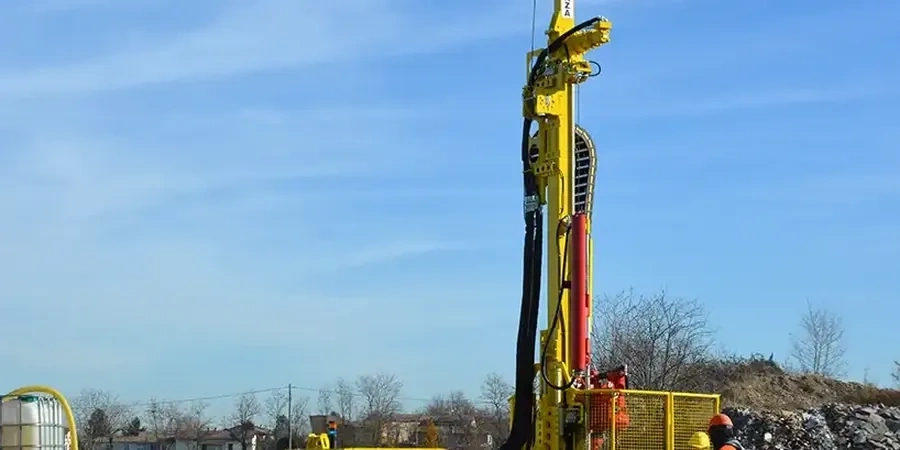
A phased approach is standard, starting with a desk study to review historical maps and geology. This informs the intrusive phase, which might involve exploratory pits, boreholes with SPTs, and CPTs for in-situ testing. The final phase includes geotechnical laboratory testing and interpretive reporting to carry out engineering recommendations.
Made ground is an artificial deposit common in urban Liverpool, containing rubble, waste, and dock dredgings. It is highly unpredictable, potentially contaminated, and often poorly compacted. An investigation must specifically characterise its depth, composition, and engineering behaviour, as it is rarely suitable for supporting structural loads without special foundation solutions.
The primary standard is BS 5930:2015+A1:2020, which provides the code of practice for all aspects of site investigation. For projects involving potentially contaminated land, BS 10175 is the key guidance. All work must also comply with CDM 2015 regulations to manage health and safety risks throughout the investigation process.