Liverpool’s geology is a mixed bag — glacial till over sandstone in the city centre, soft alluvial clays along the Mersey estuary, and made ground across the docklands. That variation means a retaining wall design that works in the Georgian Quarter can be completely wrong for Speke. We’ve seen walls fail because the bearing stratum was assumed rather than tested. A proper site investigation should include a veleta de campo to measure undrained shear strength in soft clays, or a plate load test where stiff till is present. Without that data, the active and passive pressures you calculate are just guesses. Liverpool’s building control teams expect a clear geotechnical design report — and we make sure you get one.
In Liverpool’s mixed ground, the difference between a wall that stands and one that leans comes down to site-specific shear strength data — not handbook assumptions.
Process overview
The difference between a wall in Woolton and one in Toxteth is often the founding material. Woolton’s sandstone offers high bearing capacity and low erosion risk, so a mass gravity wall works fine. Over in Toxteth, where made ground and soft clays dominate, you need a cantilever or anchored wall with a deeper embedment. That’s where a ensayo SPT becomes essential — it gives you the N-values to calculate passive resistance and check for potential bearing failure. We also run consolidated-undrained triaxial tests on undisturbed samples to get realistic effective stress parameters. Liverpool’s groundwater is generally deep in the sandstone areas but can be within 2–3 m of the surface near the docks, so drainage provisions must be designed accordingly.
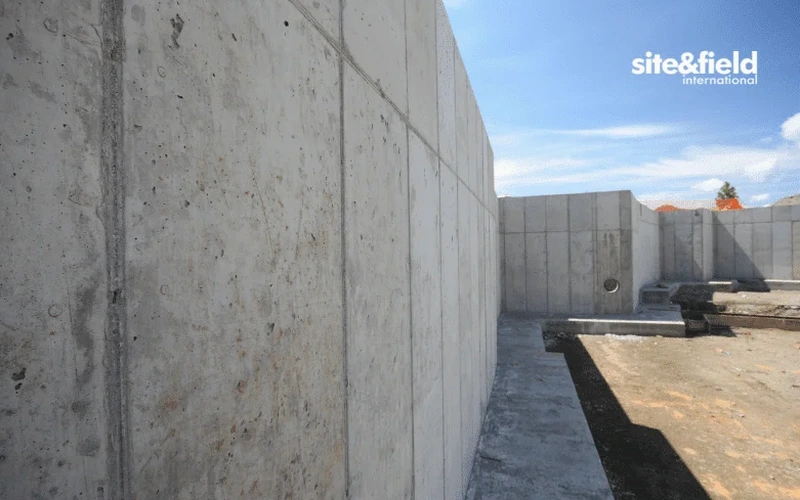
Technical reference image — Liverpool
Local context
One of the biggest risks in Liverpool is the combination of made ground and shallow groundwater, especially around the old docklands. Fill material from the 19th and 20th centuries can be loose, contain voids, and have variable compaction. If a retaining wall is built on that without improvement, differential settlement and lateral movement are almost guaranteed. On the other hand, the sandstone bedrock that underlies much of the city can be highly fractured, which changes the active pressure distribution significantly. We’ve also seen walls in the city centre fail because drainage was blocked by fine-grained till, allowing hydrostatic pressure to build up. That’s why every design we produce checks both the structural and the hydraulic failure modes.
Wall type (gravity, cantilever, anchored, sheet pile)
Selected based on retained height, ground conditions and space constraints
Design standard
BS EN 1997-1:2004 (Eurocode 7) with UK National Annex
Earth pressure model
Coulomb or Rankine with wall friction angle δ = 0.5φ’ to 0.67φ’
Drainage design
Weep holes at 1.5–2.0 m centres or continuous drainage blanket behind wall
Minimum embedment depth
Typically 0.6–1.2 m below finished ground level, increased in soft clays
Factor of safety (sliding)
1.5 (serviceability) / 1.1 (ultimate) per EC7 Design Approach 1
Additional services
01
Site-specific ground investigation
Boreholes, trial pits and In-Situ (SPT, hand shear vane, plate load) to characterise the ground profile and obtain design parameters.
02
Geotechnical design calculations
Sliding, overturning, bearing capacity and global stability checks using limit equilibrium methods, with partial factors per Eurocode 7.
03
Drainage and waterproofing design
Weep hole layouts, drainage blankets, filter geotextiles and French drains to control water pressures behind the wall.
04
Reinforced concrete wall detailing
Bending moment and shear reinforcement schedules for cantilever and propped cantilever walls, including crack width control.
Relevant standards
BS EN 1997-1:2004 (Eurocode 7 – Geotechnical design) with UK National Annex, BS 6031:2009 (Code of practice for earthworks), CIRIA C580 (Embedded retaining walls – design and construction guidance)
Common questions
What is the typical cost range for retaining wall design in Liverpool?
For a straightforward residential wall up to 2 m high in Liverpool, design fees typically range from £930 to £3,460 depending on the site complexity, number of soil layers and the need for drainage calculations. Larger commercial walls or those requiring deep embedment in made ground can push the cost higher. We always recommend getting a fixed quotation after the ground investigation results are available.
Do I need a retaining wall design if the ground is sandstone?
Yes — even good sandstone can have fractures or clay-filled joints that reduce its effective strength. A retaining wall design based on intact rock strength alone can underestimate active pressures. We’ve seen cases in Woolton where fractured sandstone required a higher design angle of friction (φ’ = 35° instead of 45°). A proper inspection and shear strength testing on rock cores will give you the right numbers.
What is the difference between a gravity wall and a cantilever wall?
A gravity wall relies on its own weight (concrete or stone) to resist overturning, and is best for heights up to about 3 m on good ground. A cantilever wall uses a reinforced concrete stem and base slab, with the weight of soil on the heel helping stability. It works well for heights up to 6 m and on softer ground like the alluvial clays near the Mersey. The choice depends on the available space, the bearing capacity and the allowable toe pressure.