Together, we solve the challenges of tomorrow.
SEE MORE →Ground improvement in Liverpool encompasses a vital suite of geotechnical techniques designed to enhance the engineering properties of soils, ensuring stability and performance for construction projects across the city. From historic docklands to modern residential developments, the region's complex ground conditions often demand tailored solutions to mitigate settlement, increase bearing capacity, and manage groundwater. This category covers methods ranging from dynamic compaction to chemical stabilization, each selected based on site-specific soil profiles and project requirements. Understanding these interventions is essential for developers and engineers working within Liverpool's unique post-industrial and coastal landscape, where weak alluvial deposits and variable fill materials are common.
Liverpool's geology is heavily influenced by its position on the eastern bank of the Mersey Estuary, underlain by Triassic sandstones and mudstones of the Sherwood Sandstone Group. However, much of the city centre and waterfront is covered by thick sequences of Quaternary superficial deposits, including glacial till, glaciofluvial sands, and extensive areas of soft, compressible alluvium. These low-strength silts and clays, often containing peat lenses, pose significant challenges for foundations and earthworks. Additionally, the legacy of centuries of industrial activity and dock construction has left a mantle of made ground, frequently heterogeneous and contaminated, which requires careful assessment before any improvement strategy is implemented.
Any ground improvement scheme in the UK must comply with the relevant British Standards, particularly BS EN 1997-2:2007 for ground investigation and testing, and the execution standards such as BS EN 12715 for grouting. The design and supervision of these works are typically guided by the Institution of Civil Engineers' Specification for Ground Treatment and CIRIA guidelines like C573 for ground stabilisation. In Liverpool, local planning authorities also require rigorous desk studies and site investigations to address potential contamination and archaeological sensitivities, especially in areas like the Liverpool Maritime Mercantile City UNESCO World Heritage Site. Compliance with the Construction (Design and Management) Regulations 2015 is mandatory to manage health and safety risks during execution.
These improvement techniques are critical for a broad spectrum of projects in Liverpool. Large-scale regeneration schemes, such as the Liverpool Waters development, rely on methods like prefabricated vertical drain (PVD) design to accelerate consolidation in thick estuarine clays. Infrastructure projects, including highway embankments and rail corridors, often employ lime and cement stabilization to improve the strength of weak subgrades. For sites with variable made ground or where vibration is a concern, grouting design offers a versatile solution to fill voids and bind loose soils. Furthermore, the remediation of former industrial land for new housing frequently calls for dynamic compaction design to densify granular fills efficiently. Each project demands a bespoke approach, integrating site investigation data with rigorous design to ensure long-term performance and regulatory compliance, ultimately transforming challenging ground into a safe and reliable construction platform.
Ground improvement refers to a set of geotechnical processes that modify soil properties to enhance strength, reduce compressibility, or control permeability. In Liverpool, it becomes necessary when construction is planned on the soft alluvial clays, peat, or loose made ground prevalent along the Mersey Estuary, where natural soils cannot safely support structural loads without excessive settlement or instability.
Ground improvement in the UK is governed by a framework including BS EN 1997 (Eurocode 7) for geotechnical design, BS EN 12715 for execution of grouting, and the ICE Specification for Ground Treatment. Additionally, the Construction (Design and Management) Regulations 2015 apply to all sites, ensuring safety during design and execution, alongside local planning conditions in Liverpool.
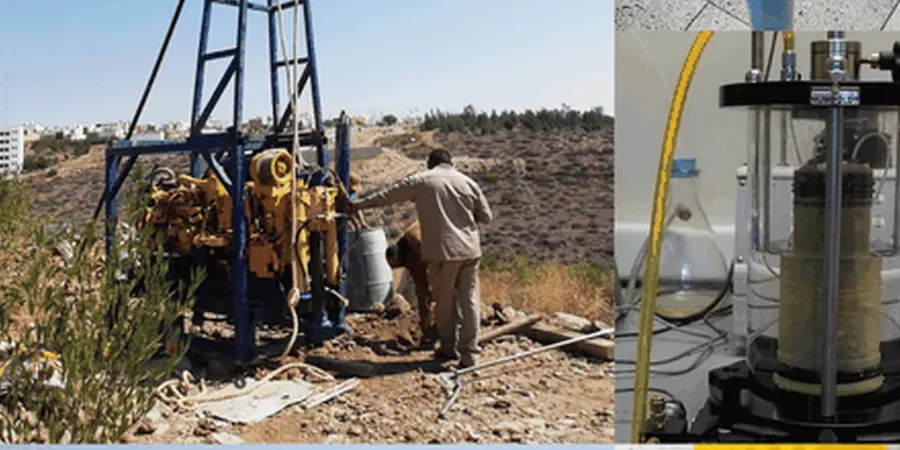
Selecting the appropriate method requires a detailed desk study and ground investigation to define soil stratigraphy, strength, and groundwater conditions. The choice between techniques like preloading with surcharge, jet grouting, or lime stabilization depends on factors such as soil type, required improvement depth, loading conditions, programme constraints, and environmental sensitivities on the site.
Prefabricated vertical drains (PVDs) are highly effective in soft, saturated estuarine clays typical of Liverpool's waterfront. They accelerate natural consolidation by shortening the drainage path for pore water, allowing excess water to dissipate faster under surcharge loading. This significantly reduces the time required to achieve primary settlement, enabling construction to proceed on a predictable schedule.