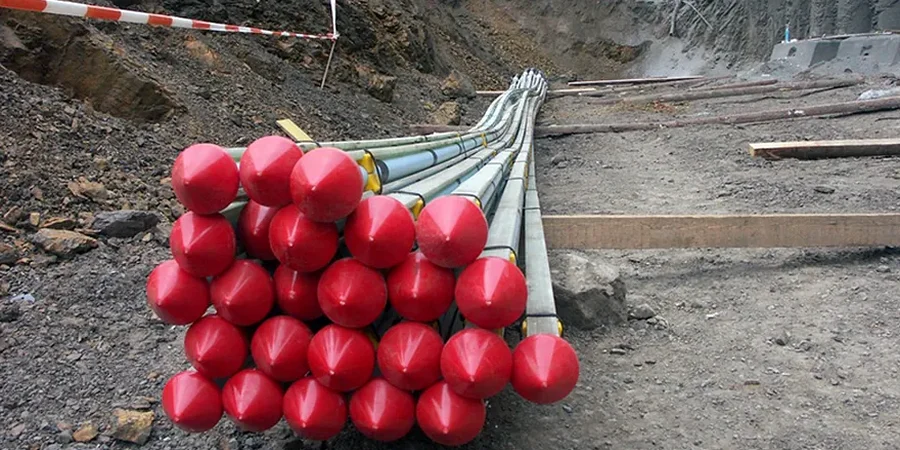
Eurocode 7 (EN 1997-1:2004) forms the backbone of our anchor design methodology in Liverpool. The city's underlying geology — glacial till over Triassic sandstone — demands careful distinction between active and passive anchor systems. Active anchors pre-stress the ground to mobilise resistance; passive anchors rely on ground movement to generate load. We apply these principles to stabilise retaining walls, slopes, and excavations across Merseyside. Before designing anchors, we often run a compression simple test on intact rock cores to establish baseline strength parameters. This ensures the bond length and grout take are optimised for Liverpool's variable ground conditions. Our approach reduces risk of over-design while maintaining safety factors required by UK regulations.
Active anchors pre-stress the ground; passive anchors mobilise resistance through movement. Both require site-specific design in Liverpool's glacial till and sandstone.
Process overview
Liverpool's urban development since the 18th century — especially the Albert Dock and waterfront regeneration — created deep fills and old foundations that complicate anchor installation. The sandstone bedrock, typically found between 5 and 15 m depth, offers high bond capacity but requires careful drilling to avoid tool deflection. We design anchor lengths ranging from 6 to 25 m, depending on whether the system is temporary or permanent. Corrosion protection for permanent anchors follows BS EN 1537. For projects near the Mersey estuary, we combine anchor design with grouting to seal fissures in the sandstone that could cause loss of grout during tensioning. This dual approach has proven effective in Liverpool's mixed ground conditions, where glacial till overlies weathered rock.
Technical reference image — Liverpool
Local context
We use a purpose-built hydraulic anchor testing frame that can apply loads up to 1,500 kN. In Liverpool, the main risk during anchor installation is encountering buried obstructions — old masonry, timber piles, or abandoned operations — especially in the city centre and docklands. These can cause drill bit jamming or deviation from the design alignment. We mitigate this by reviewing historical borehole logs and performing a georadar survey (GPR) prior to drilling. This identifies subsurface anomalies before mobilising the rig, saving time and preventing costly re-drills.
Active (pre-stressed) / Passive (gravity-activated)
Design Standard
Eurocode 7 (EN 1997-1:2004), BS EN 1537
Bond Length Range
3.0 - 12.0 m depending on ground conditions
Corrosion Protection
Double corrosion protection for permanent anchors
Test Load
Up to 1.5 x design working load (proof testing)
Additional services
01
Active Anchor Design (Pre-stressed)
Design of pre-stressed ground anchors for retaining walls, bridge abutments, and slope stabilisation. Includes bond length calculation, tendon selection, and proof test specification. Suitable for Liverpool's sandstone bedrock where high bond capacity allows shorter anchors.
02
Passive Anchor Design (Gravity-activated)
Design of passive anchors for temporary excavations and soil nail walls where ground movement is acceptable. Focus on load-displacement behaviour and corrosion protection for temporary installations. Ideal for Liverpool's glacial till deposits where active pre-stressing may not be required.
Relevant standards
Eurocode 7 (EN 1997-1:2004), BS EN 1537:2013 (Execution of Special Geotechnical Works — Ground Anchors), BS 5930:2015 (Code of Practice for Ground Investigations), FHWA-NHI-05-039 (Ground Anchors and Anchored Systems)
Common questions
What is the difference between active and passive anchors?
Active anchors are pre-stressed after installation to apply a compressive force to the ground, improving stability immediately. Passive anchors, also called soil nails or deadman anchors, only resist load when the ground begins to move. Active anchors are used where immediate support is needed; passive anchors work well where some ground movement is acceptable.
What is the typical cost range for anchor design in Liverpool?
The typical cost for anchor design in Liverpool ranges between £840 and £2,640, depending on project complexity, number of anchors, and required testing. This includes site-specific design, bond length calculation, and proof test specification. Contact us for a quote tailored to your project scope.
How deep do anchors need to be in Liverpool's ground?
Anchor depth depends on the target stratum and required capacity. In Liverpool, anchors typically extend 6 to 15 m to reach competent sandstone or dense glacial till. Temporary anchors may be shallower if they only need to resist short-term loads. We determine the optimal depth through site investigation and geotechnical analysis.
Do Liverpool's tidal conditions affect anchor design?
Yes. Near the Mersey estuary, fluctuating groundwater levels can reduce effective stress and bond capacity. We account for this by using conservative design parameters and specifying corrosion protection suitable for cyclic wet-dry conditions. Our designs include a water table fluctuation range based on local monitoring data.